eNews
#04 2025
Introducing young minds to the scientific arena and terrestrial ecology: Arid Lands Node Grade 9 Science Camp
By Phumudzo Ragimana, Zanele Ntshidi and Tshililo Ramaswiela, Arid Lands Node, NRF-SAEON

#04 2025
By Phumudzo Ragimana, Zanele Ntshidi and Tshililo Ramaswiela, Arid Lands Node, NRF-SAEON
The Arid Lands Node hosted a Grade 9 Science Camp at the Mokala National Park in July this year, which gave learners ample opportunity to engage with their natural surroundings.
The objective of the camp was to expose learners to science adventures using different scientific methods, tools and equipment that scientists use to collect terrestrial data. The camp aimed to provide a platform for learners to expand their basic understanding of terrestrial/environmental science. A total of 29 learners and three educators from Thabane High School, Vuyolwethu High School and Emang Mmogo Comprehensive School participated in the camp.
Day 1 began with learners outlining their knowledge about environmental sciences and scientific research, followed by an introduction to scientific research, highlighting how scientists explore the world, and the steps involved in conducting investigations.
Learners engaged in a career talk designed to immerse them in the world of environmental science and conservation. In most cases, learners from disadvantaged communities do not have sufficient opportunities to explore different careers. The objective of this activity was to expose Grade 9 learners to science careers as well as opportunities in science and get them to think about the subject stream they would like to choose for FET level.
The engaging talk featured a panel of experts – Mandlenkosi Mchunu (field ranger, SANParks), Zanele Ntshidi (hydrologist, Arid Lands Node) and Roxanne Erusan (senior biotechnician, SANParks).
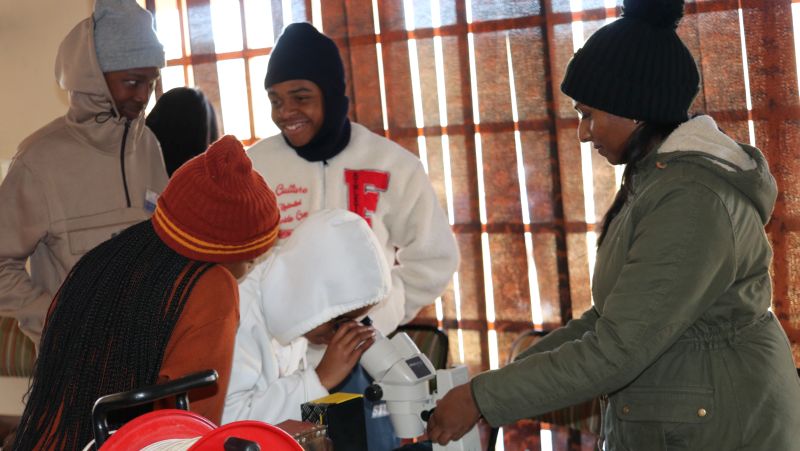
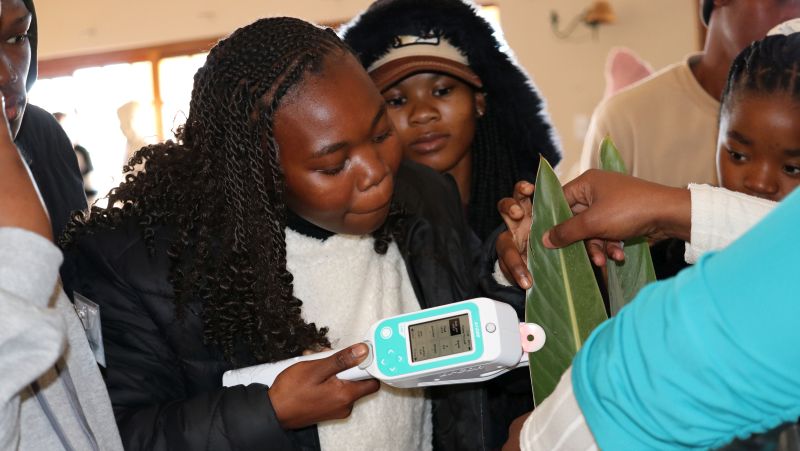
Learners engage in hands-on activities facilitated by senior biotechnician Roxanne Erusan of SANParks (left) and hydrologist Zanele Ntshidi, SAEON Arid Lands Node. (Photos: Phumudzo Ragimana)
Beyond the insightful talks, learners participated in hands-on activities using scientific tools for animal monitoring, water quality testing, microscopy and plant water stress. This approach fostered a deeper understanding of scientific principles by integrating theoretical knowledge with practical knowledge. The learners’ enthusiasm reflected the programme’s success in sparking curiosity and interest and inspiring future scientific endeavours.
Following the career talk and interactive activities with the experts, learners were offered an opportunity to reflect on their career interests and the subject requirements to gain a clear understanding of the subject stream to choose for FET level. They did this through completing a career planning activity to determine the careers they are interested in, the subject requirements of that career stream, where to study and the qualities required for that profession.
Day 2 of the camp offered a deep dive into the natural and cultural heritage of the Northern Cape province, beginning with an enlightening visit to the Mokala National Park Museum. Here, participants embarked on a journey through time, discovering the rich history of the park, from its geological formations to the intricate relationships between its diverse flora and fauna.
The museum exhibits provided a comprehensive overview of the region’s unique biodiversity, highlighting key plants and animal species that call Mokala home and the conservation efforts underway to protect them. This immersive experience laid a crucial foundation for the practical activities that followed.
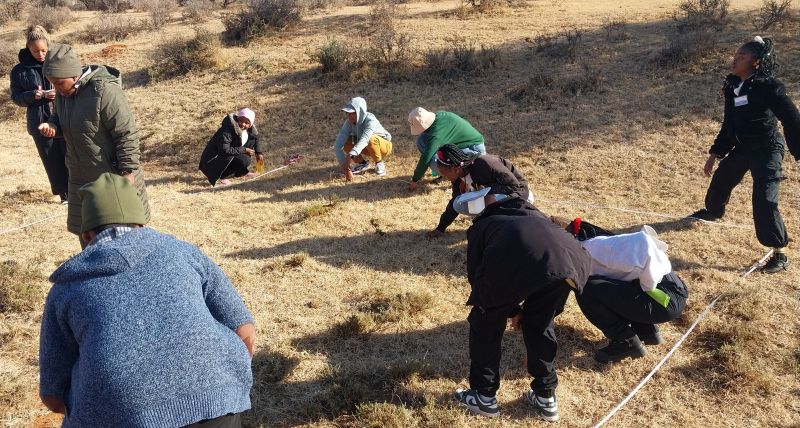
Field data collection using quadrat vegetation sampling. (Photo: Phumudzo Ragimana)
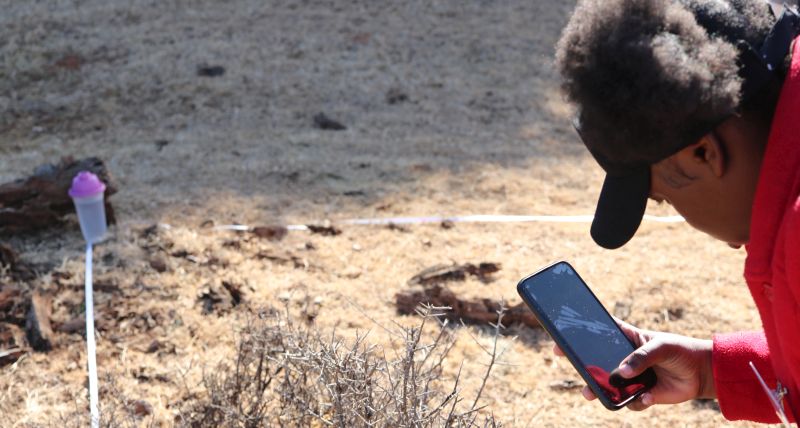
Plant identification using iNaturalist. (Photo: Phumudzo Ragimana)
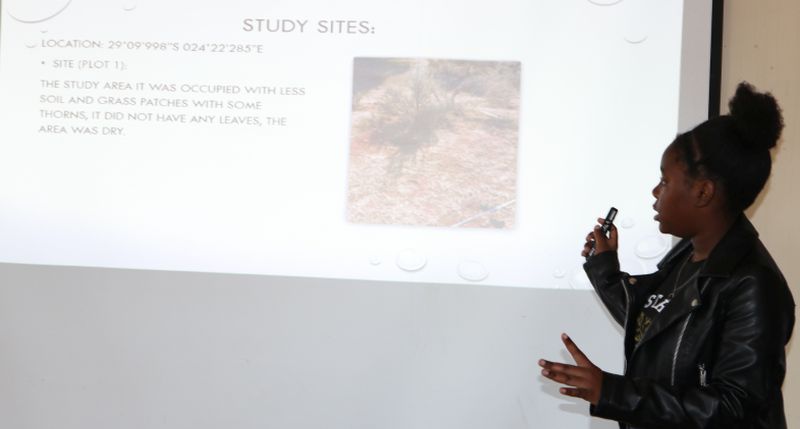
Group presentations of the mini research projects. (Photo: Phumudzo Ragimana)
Following the museum visit, learners conducted a vegetation and soil survey. The primary objective was to expose them to techniques used to assess species composition, primarily through meticulous observation and the innovative use of the iNaturalist application for plant identification. This activity taught learners how to collect scientific data, assess species composition via observation, and use iNaturalist for plant identification.
The budding scientists used quadrat sampling to study plant composition and distribution across the Nama Karoo, Grassland and Arid Savanna biomes, gaining experience in ecological data recording, biodiversity interpretation and biome differentiation. iNaturalist highlighted the role played by citizen science in ecological research.
The young scientists were introduced to practical data analysis using computers as they prepared for their mini research project. On the last day of the camp, groups were given a platform to present their projects as well as an opportunity to participate in a game drive where they learned about the different plants and animals found at Mokala National Park.
Working with research equipment and in the field helped learners understand the methods and tools used in real-world terrestrial science. The camp promoted collaboration and teamwork through group projects and presentations. This approach enabled the learners to build confidence in their scientific engagement, potentially inspiring future STEM studies or careers.