eNews
#03 2026
From Theory to The Field: The 2026 Grade 9 Science Camp Journey
By Phumudzo Ragimana Arid Lands Node, NRF-SAEON

#03 2026
By Phumudzo Ragimana Arid Lands Node, NRF-SAEON
The Arid Lands Node hosted a 2026 Grade 9 Science Camp with three newly adopted schools namely: Mogomotsi High School (Warrenton), Bongani High School (Douglas), and Emmanuel High School (Kimberley). The camp was a three-day program designed to immerse learners in the practical application of scientific inquiry, environmental stewardship, and career exploration. By balancing theoretical instruction with hands-on field experience, the program successfully transitioned the group from passive learners into active environmental investigators.
The program focused on establishing a foundation in the scientific method, moving beyond theoretical definitions to practical application. Learners learned to convert observations into structured inquiry by distinguishing between observation and inference while following the systematic process of questioning, hypothesis formation, testing, and analysis.
Field research played a central role in the program, utilizing modern technology to understand local ecology. During the camera trap activity, learners examined wildlife diversity by analyzing animal activity patterns. They learned to categorize species as diurnal, crepuscular, or nocturnal, while studying food preferences to better understand the roles animals play within the food web, such as seed dispersal. Complementing this, the iNaturalist Scavenger Hunt introduced learners to citizen science, challenging groups to document various biotic and abiotic elements. Further ecological research was conducted through a belt/line transect activity, which introduced learners to vegetation monitoring. By counting tree species across different height classes along fixed lines, students observed firsthand how species diversity and abundance vary across the landscape.
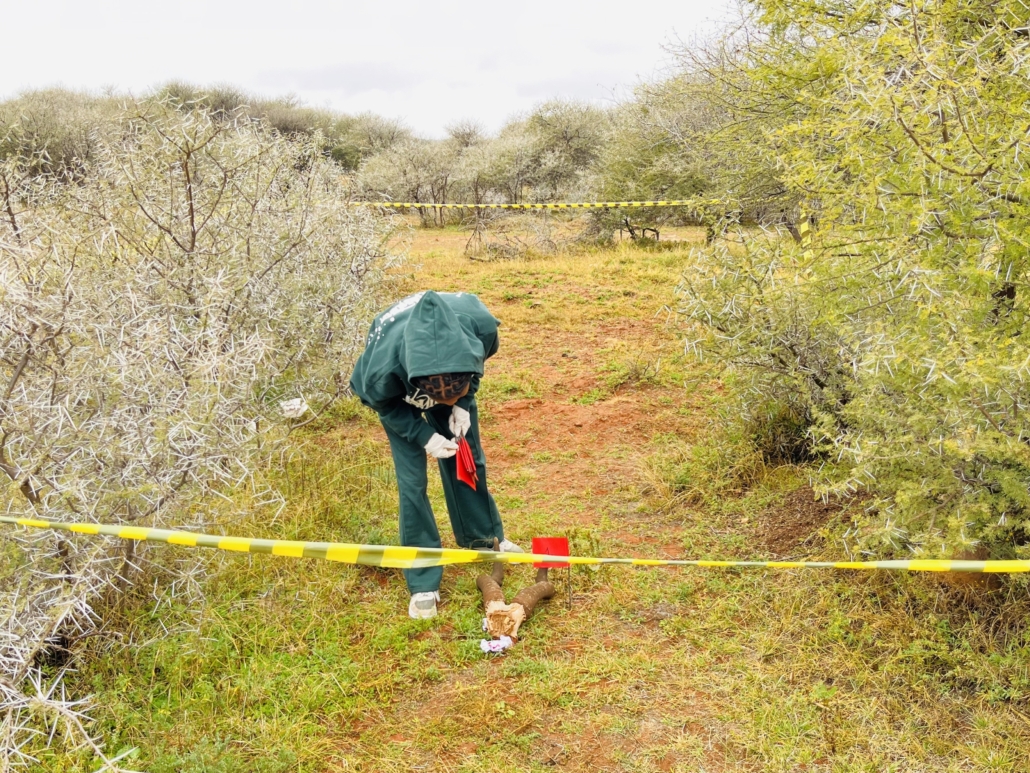
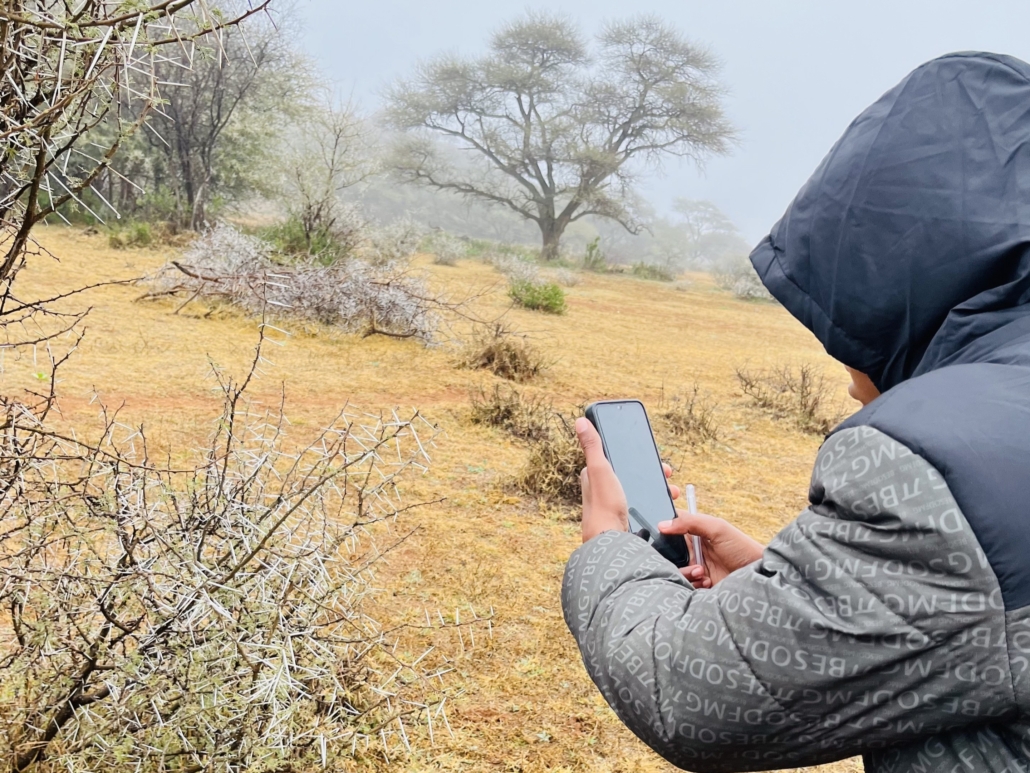
A lead investigator conducts a crime scene analysis during the biodiversity crime activity (left), while participants engage in an iNaturalist scavenger hunt (right).
Environmental responsibility was a core focus. In the Biodiversity Crime activity, learners investigated human-induced degradation by surveying for poaching, littering, and habitat destruction. They defined biodiversity crime and analyzed its disruption of ecological services. This session fostered stewardship and emphasized the necessity of habitat preservation.
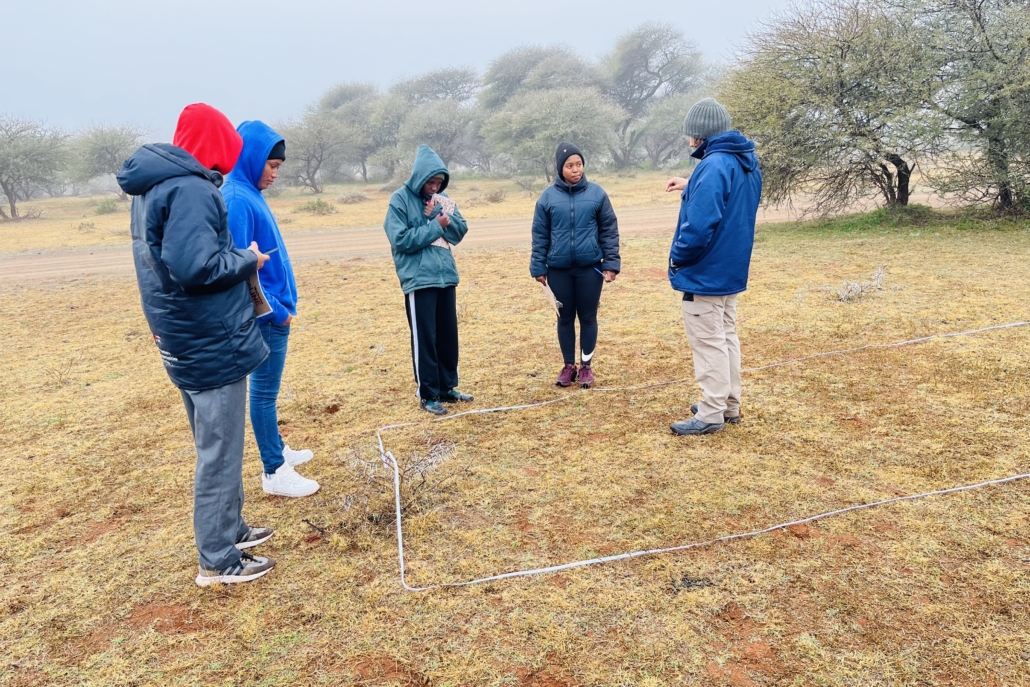
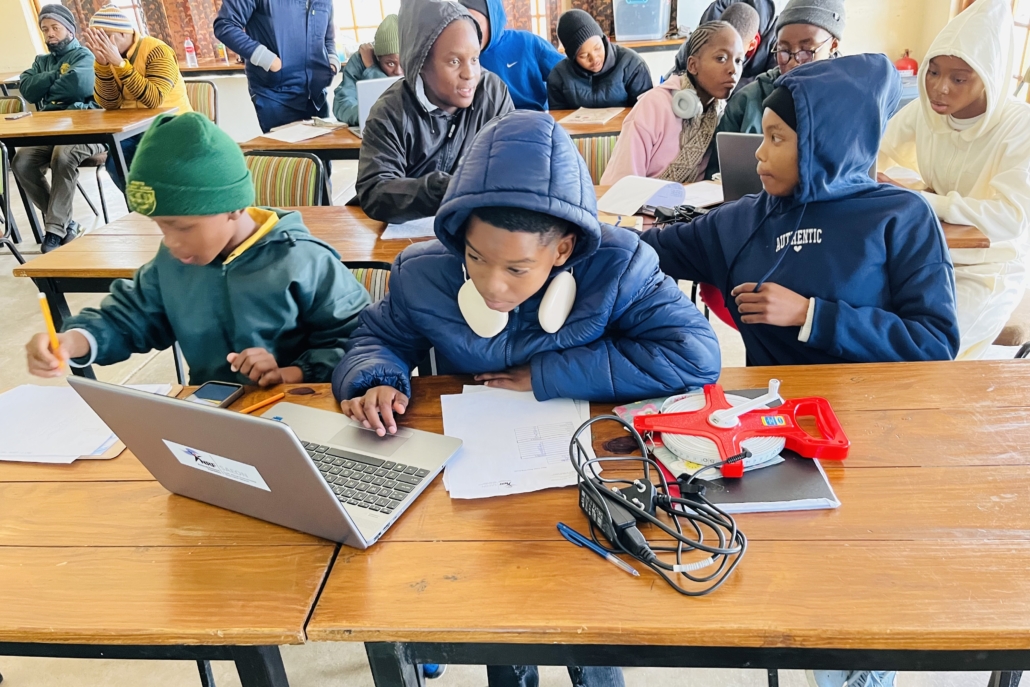
Learners collecting data using the belt transect method (left), and learners analyzing their results following field data collection (right).
The camp also prioritized the learners’ academic and professional futures. Dedicated sessions provided intensive exposure to STEM career pathways, specifically focusing on the subject requirements needed for the Further Education and Training level. Through the My Career Planning activity, learners reflected on their personal interests, where to study, and the professional qualities required for their chosen fields.
The camp concluded in a capstone project where students processed their raw field data using computerized methods. This experience fostered essential skills in data literacy, digital proficiency, and scientific synthesis. By finalizing their group presentations, learners moved from data collection to scientific communication, building confidence in public speaking, and learning how to articulate complex, evidence-based findings clearly and professionally.
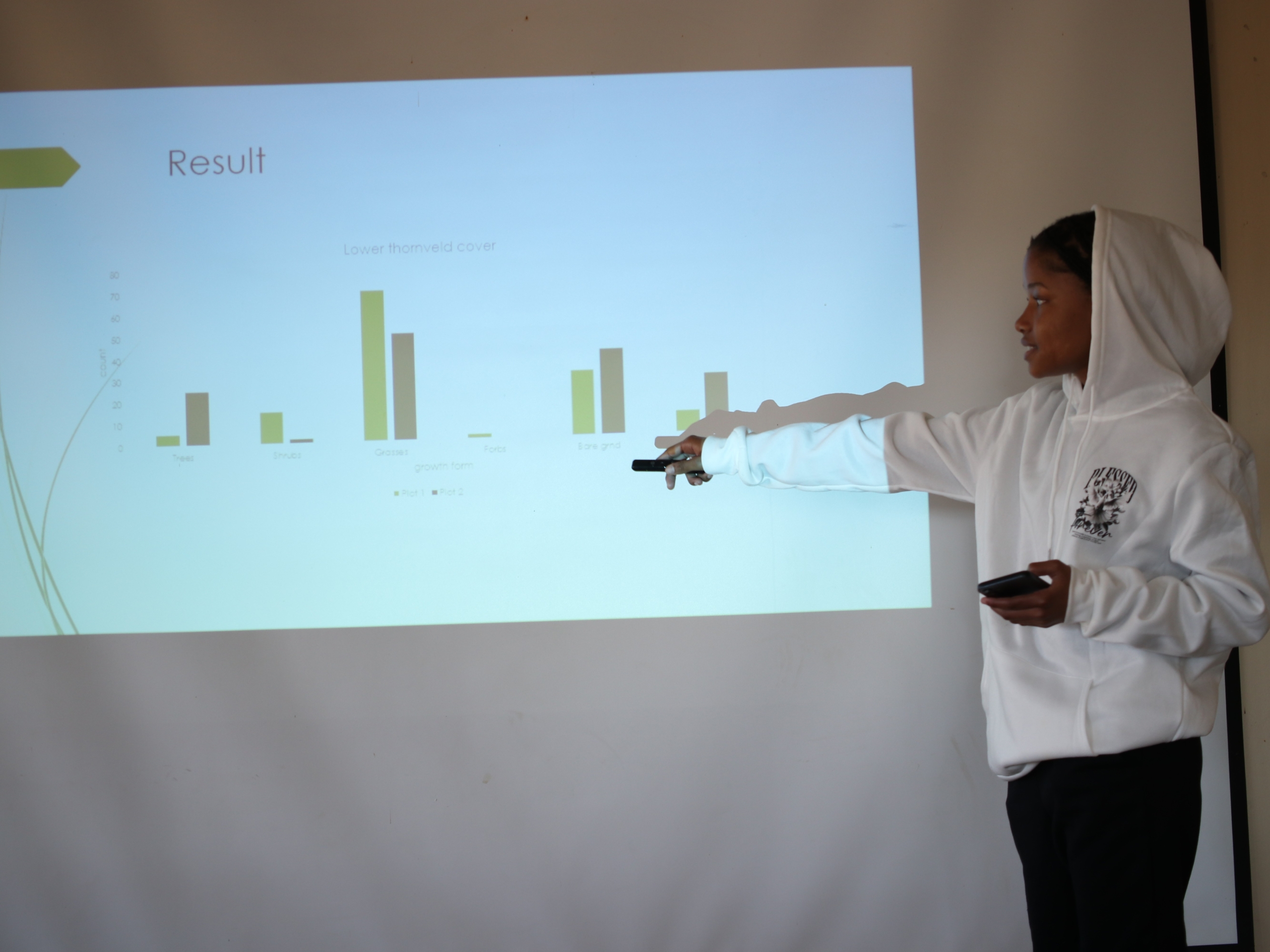
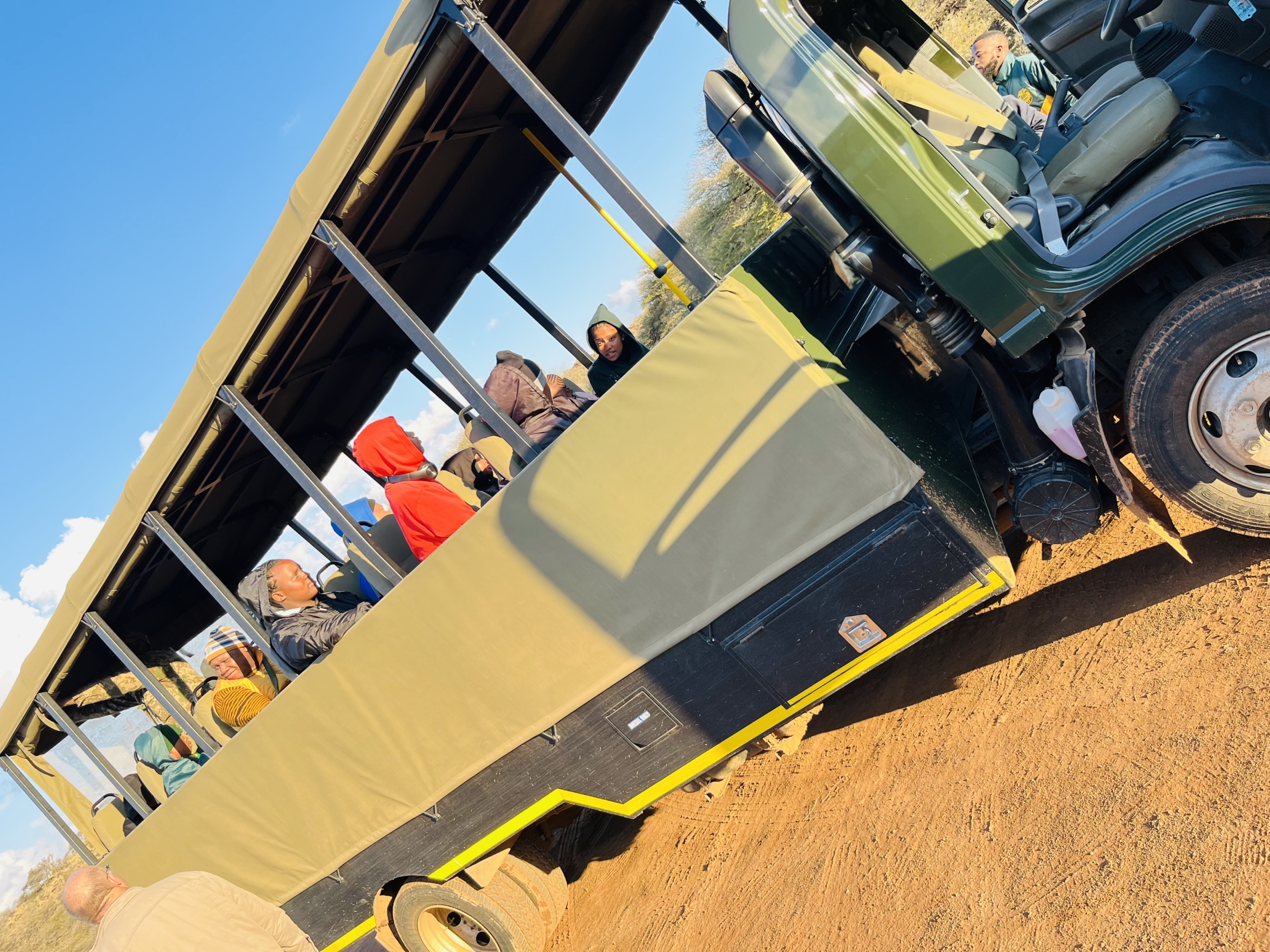
Groups present projects initiated at the start of the camp (left); to conclude the program, learners explored the park’s fauna and flora during a guided game drive (right).